WVU STEAM TAC Program visits Valley High School
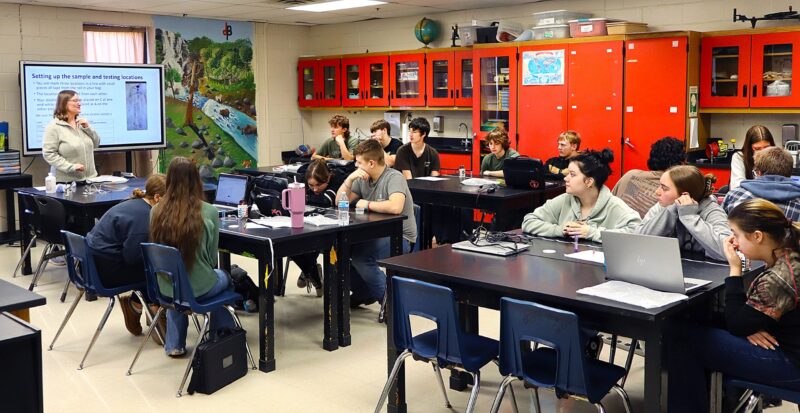
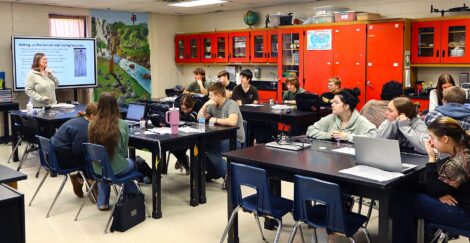
On Wednesday and Thursday, the 18th and 19th of February, Melissa Bane (Specialist) from WVU STEAM TAC program instructed the school’s biology classes. Her program gave insight into advance training and understanding of coding gas line sensors. On the first day Ms. Bane worked with the students to give them an understanding of the technology, and terminology of gas monitoring science.
The next day the students connected sensors to computers, and programmed information into the lines of code to activate the metering program. Students used isopropyl alcohol to simulate volatile gas contamination in the atmosphere. Working in teams, they prepare the test and analyze the results. During the testing, deviations would arise and students were expected to figure where to adjust code input to a line the sensor with the monitor and collect samples for final analyses.
The program has been working with schools around the state for the last four and a half years. The program Instructors set their schedule so they can visit three schools a week.
The goal of the program is to give students insight into careers that are available to them within the state. Among the careers the training can prepare students for, environmental sciences, welding, meter and line inspections, geologist, truck drivers, OIS technicians, and accountants. The course gives the individuals an understanding of terminology that is used across the industry.
The course is sponsored by West Virginia University and supported by Hope Gas.
“Programs such as this provide significant benefits to our students. They offer opportunities to participate in simulated workplace experiences and help students explore the wide range of career possibilities available within a given field. With West Virginia’s strong presence in the oil and gas industry, these programs also introduce students to local job opportunities that are both accessible and in high demand. Presentations like this not only expand students’ awareness but also help them recognize their own capabilities in performing job-related tasks. Ultimately, these experiences encourage them to explore, research, and make more informed decisions about their future career paths” stated Valley High School Principal Jackie Shepard.
Observing the hands-on class, it was easy to see that students were embracing the program and exchanging ideas of fundamental science. Some changed test parameters to see how the results would be affected. They were engaged and understood the possibilities of the instructions and what it could do to help them in the future.
Society
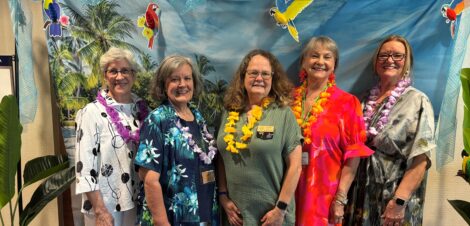
Chapter U Women Step Forward in Service to the State of West Virginia
Rotary